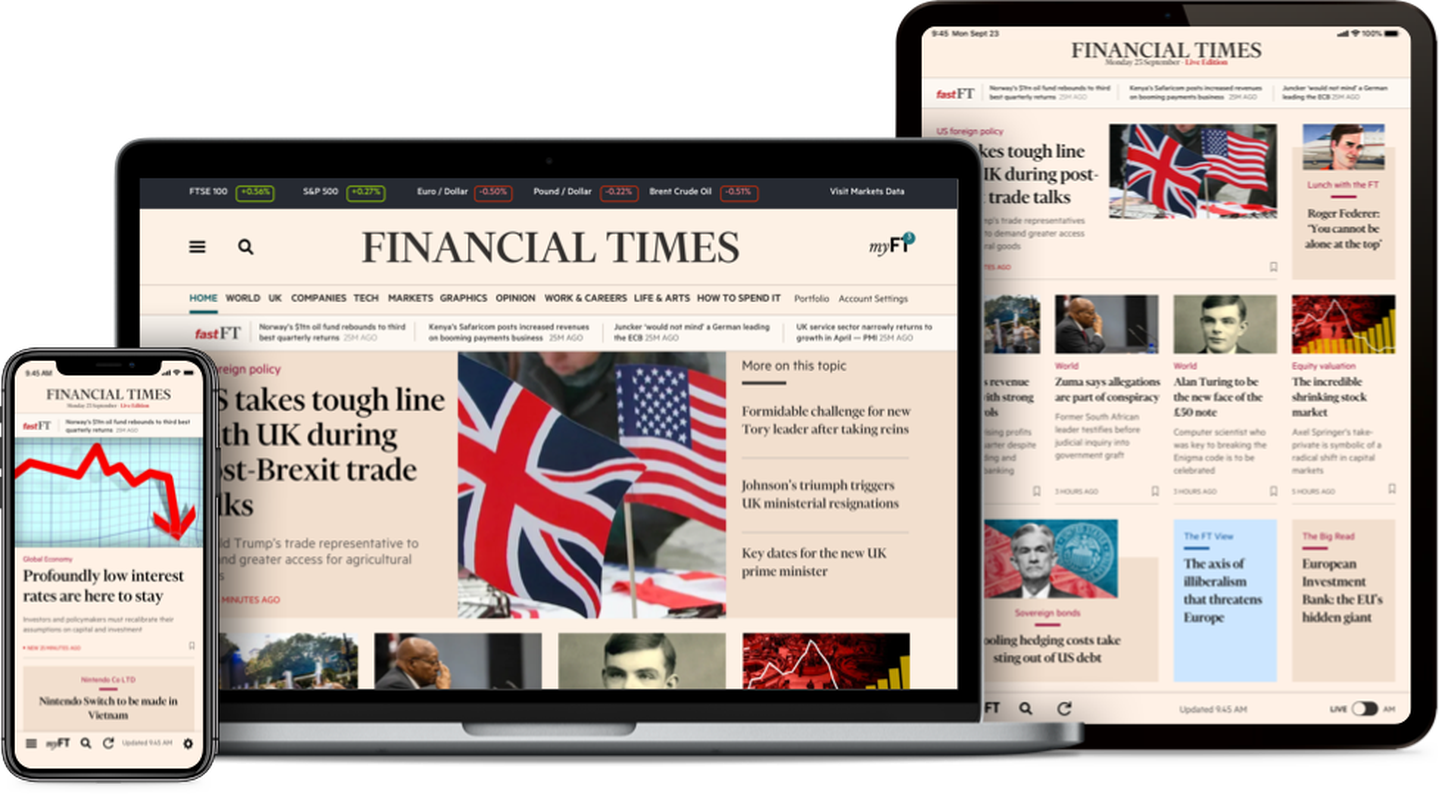
In an MBA classroom, keeping pace with a fast-moving business world isn’t just an advantage - it’s essential. Real-time news helps students move from headline to analysis, engaging with business decisions as they unfold rather than in hindsight.
In this article, Laura Chamberlain, Professor of Marketing at Warwick Business School, shares how she uses FT Professor’s Picks as a teaching tool. This weekly, faculty-curated selection of Financial Times articles connects news to strategy, helping students translate current business stories into richer discussion and insight. Comments or contributions are welcome at profpicks@ft.com

From Planned Discussion to Live Classroom Debate
I really enjoy teaching Marketing on our Executive MBA programme because I get to think on my feet, draw out diverse perspectives, and watch as 40 senior professionals dismantle their assumptions in real time. When I recently introduced a Financial Times article about £4.50 matcha lattes outselling cappuccinos, I genuinely didn’t know where the conversation would lead. That's precisely the point.
I'd anticipated we'd compare consumer preference with manufactured social media hype. But someone from the tea industry in the room contributed with real life business experience in buying and marketing matcha, alongside classmates spanning three continents, from retail, finance and technology. We examined supply chain implications, debated whether the cappuccino comparison was realistic, and explored how content shapes the customer journey.
This organic evolution from planned discussion to unexpected depth exemplifies dialogic teaching and why contemporary cases, particularly FT Professor's Picks, have become essential to my practice. I started writing them to bridge the gap between academic rigour and real-world relevance. Each piece takes a current business story and provides conceptual framing, discussion questions and classroom applications. They're designed to be immediately usable: substantive enough for serious analysis, accessible enough for time-pressed educators, and current enough to feel alive to students.
I'm not dismissing traditional case study methodology. The Harvard case method has earned its place in business education. I use it regularly and value it. But I think about pedagogy as a toolkit. Different tools serve different purposes. Traditional cases excel at developing systematic analysis. Contemporary cases do something else entirely: they invite real-time critical engagement with unfolding phenomena where outcomes aren't yet known.
Why the Dialogic Classroom Matters
The "sage on the stage" shouldn't be the dominant pedagogical method anymore, particularly at MBA level. I'm teaching professionals with years of expertise who need space to interrogate ideas, test assumptions and grapple with real-world complexity. My win is when someone enters my classroom knowing little about marketing and leaves saying "you've completely transformed how I think about marketing." When I have marketers present, I want to push them to think critically, understand contemporary debates, make better informed decisions and improve their craft.
This requires what educational theory calls a "praxis" approach, one I've explored in recent research on transforming marketing education. Praxis creates space where reflection and action meet, so students not only learn about marketing but also actively engage with it as a live dynamic, contested discipline. They bring diverse experiences. I bring theoretical frameworks, contemporary research and probing questions that move us from opinion to analysis. Together we construct understanding neither of us could reach alone.
FT news cases elevate this process. They're current enough that everyone has opinions but no one has "the answer." They're substantive enough to reward serious analysis. And crucially, they're happening now, so students can apply learning immediately.
The Balance Between Historical and Contemporary
Marketing moves faster than traditional teaching materials can keep pace. By the time a case study about plant-based meat reaches publication, Beyond Meat's share price may have plummeted 90%.
Historical cases have tremendous value. We need to learn from history, and examining how industries evolved over time develops crucial analytical capabilities. A well-chosen case illuminates contemporary challenges precisely because it provides hindsight. We can see how decisions played out and identify patterns that repeat. We often see how historical cases deepen understanding of live issues.
But it's about balance. Historical cases develop one mindset and set of skills; contemporary cases develop another. When we work with live stories where outcomes are (at that point) unknown, students grapple with genuine uncertainty. They must make judgements with incomplete information and defend decisions when multiple paths seem viable. This is professional practice. Real-time news cases don't replace historical analysis; they complement it by developing confidence to act under uncertainty rather than only analyse with certainty.
How to Integrate Professor’s Picks
The question isn't whether to use Professor’s Picks, but how.
Start with your pedagogical anchor. For my core Marketing module, that anchor is critical thinking. I'm not teaching students what to think about marketing; I'm developing their capacity to critically examine practices, question assumptions and consider issues from multiple perspectives.
Map stories to learning outcomes. I audit my module and identify where contemporary cases illuminate core concepts. Consumer behaviour pairs with emerging trends. Marketing strategy connects to competitive dynamics in real time. The matcha trend explored symbolic consumption and generational marketing. The AI shopping article I recently used examined how technology reshapes decision-making whilst raising ethical questions.
Design the intervention, not just the content. Simply assigning an article isn't enough. The real work happens in facilitation. I use the discussion questions that accompany Professor's Picks as starting points, then structure discussions to leverage my students' expertise. One noted in student feedback: “It was so valuable to take current case studies and apply our learning in real time.” Consider what questions will guide your discussion? How will you connect the case to established frameworks?
Scout strategically and manage timing. There's inherent tension in using "current" cases: setting the reading too far in advance means sacrificing currency. Too close to class, students can often arrive unprepared. Financial Times articles offer a distinct advantage. Unlike dense, 40-page case studies, these pieces are short, well-written and accessible. Students can engage meaningfully even on short notice. In future, I'll provide thinking questions alongside pre-reading, but the format itself makes this approach feasible.
This approach requires flexibility and some educators find that uncomfortable. You cannot predict exactly where discussions will lead. But confidence builds with practice. Know your materials well. Be clear on learning objectives and the critical questions students must engage with. This groundwork enables productive unpredictability. The conversation may take unexpected turns, yet you can guide it towards meaningful learning because you know the destination.

In the Classroom
Professor’s Picks transform discussion quality because outcomes aren't yet determined and students engage more authentically with uncertainty. This is precisely a skill we need to develop.
When we discussed AI-powered shopping, students weren't recalling memorised frameworks. They were wrestling with genuine dilemmas: What happens to brand loyalty when AI intermediaries filter decisions? How do we balance convenience against consumer autonomy? For the marketers in the room, these weren't academic exercises. For the non-marketers, these questions revealed the complexity and ethical weight of what might have seemed like simple promotional tactics.
The famous "it depends" that frustrates students early in their programme becomes something they can navigate with confidence. They learn to identify which factors it depends upon, how to weigh competing priorities, and how to make defensible decisions under uncertainty. When examining the matcha trend, students identified parallels to coffee premiumisation decades earlier but also noted crucial differences in how social media accelerates trends. More importantly, they could articulate what conditions would make this trend sustainable. That's the kind of critical thinking that makes better marketers.
Beyond Marketing
This approach isn't limited to marketing modules. Strategy colleagues could use current M&A stories. Finance educators could leverage IPO coverage. The key is selecting stories with enough substance to reward critical analysis. The Professor's Picks format works across disciplines because it balances currency with analytical depth.
The transformation in business education won't come from abandoning traditional pedagogies, but from thoughtfully augmenting them. Real-time news cases demand critical thinking rather than recall. They reward grappling with uncertainty. They connect classroom learning to live professional challenges.
When a student enters my classroom with vague assumptions about marketing and leaves understanding it as a complex discipline involving psychology, ethics, strategy and cultural analysis, that's transformation. When a practising marketer starts interrogating their own assumptions, that's growth. And increasingly, it happens through conversations sparked by Professor's Picks articles like the one about £4.50 matcha lattes.
In using a dialogic approach, I'm never quite sure what we'll discover together. But when we bring contemporary cases, diverse professional experiences, and willingness to think critically, something worthwhile emerges. That's preparing people for tomorrow's uncertainties, with confidence to think, question, analyse and decide.
Foster a global mindset at your university with FT Professional
1,000+ leading education institutions trust FT Professional to enrich curricula with unique commentary, analysis, and tools to deliver a blended learning experience. For more information about how the Financial Times can help your school, please get in touch.
The FT enables students to connect current events with course principles and gives them current, real-world material for their assignments. It is a necessity to our program’s goal-oriented approach to problem solving.
professor, Esslingen University